Get Started Now
Home > Insights > Can You Dispute a Background Check?

Can You Dispute a Background Check?

What applicants and employers should know about disputing inaccurate or incomplete background check information.

Dispute

Yes. If you believe information in a background check is inaccurate or incomplete, you generally have the right to dispute it.

Under the Fair Credit Reporting Act (FCRA), consumer reporting agencies that prepare employment background checks must maintain procedures to help ensure maximum possible accuracy. When incorrect information appears in a report, applicants may request a reinvestigation of the disputed information.

Understanding how the dispute process works is important for both applicants and employers involved in employment screening decisions.

What Types of Errors Can Be Disputed?

Background check disputes often involve information that is inaccurate, incomplete, outdated, or improperly matched to the applicant.

  • Criminal records belonging to another person
  • Incorrect case dispositions
  • Duplicate records
  • Expunged or sealed records reported improperly
  • Incorrect employment verification results
  • Incorrect education verification information
  • Motor vehicle record inaccuracies
  • Identity or address mismatches

Not every dispute involves identity theft or major reporting errors. Even small inaccuracies can affect hiring decisions if not corrected.

Who Handles the Dispute?

In most employment screening situations, the dispute is handled by the consumer reporting agency that prepared the report. The employer usually does not have the ability to directly change report information themselves. For this reason, applicants should direct disputes to the consumer reporting agency, not the employer.

The consumer reporting agency may:

  • Review the disputed information
  • Contact data providers or courts if necessary
  • Reinvestigate the reported information
  • Correct or update information when appropriate
  • Issue updated reports if changes are made

The exact dispute procedures may vary depending on the type of information involved.

How Does the Dispute Process Work?

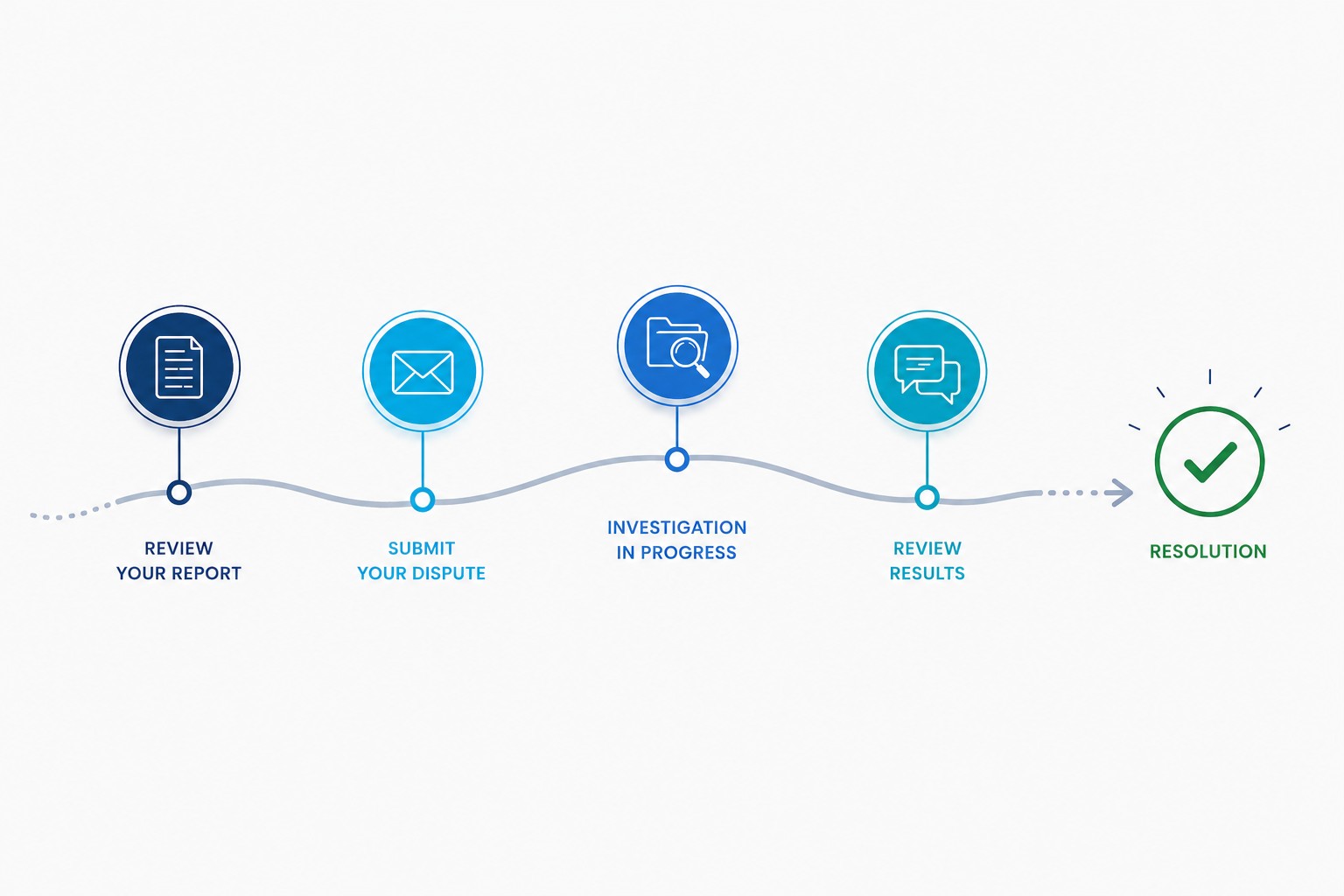
1. The Applicant Identifies the Disputed Information

The applicant reviews the report and identifies information believed to be inaccurate or incomplete.

2. The Applicant Submits a Dispute

The dispute is submitted to the consumer reporting agency, often by email, online portal, mail, or telephone.

When submitting a dispute, applicants should identify the specific information believed to be inaccurate, explain why it is incorrect, and include any supporting documentation that may help resolve the issue. Relevant documents may include court records, diplomas or transcripts, motor vehicle records, or other official records depending on the type of information being disputed.

3. A Reinvestigation Occurs

The screening company reviews the disputed information and may contact courts, employers, educational institutions, motor vehicle agencies, or other data sources as necessary.

4. The Results Are Communicated

If corrections are made, an updated report may be issued.

If information is verified as accurate, the report may remain unchanged.

How Long Does a Background Check Dispute Take?

Under the FCRA, reinvestigations generally must be completed within 30 days. This period may be extended to 45 days if the applicant submits additional information during the reinvestigation process.

Some disputes may be resolved more quickly, while others involving courts, government agencies, or manual verification processes may take longer.

Complex disputes involving multiple jurisdictions or incomplete documentation may also require additional time.

What Happens During the Hiring Process?

If an employer is considering making a negative hiring decision based on information in a background check, the FCRA generally requires the employer to provide:

  • A pre-adverse action notice
  • A copy of the report
  • A Summary of Rights

This gives the applicant an opportunity to review the report and dispute inaccurate information before a final employment decision is made.

It is important to note that the FCRA does not require employers to pause or delay the hiring process while a dispute is being investigated. Applicants who submit a dispute during the hiring process should be aware that a final employment decision may still proceed on its own timeline.

The dispute process is one reason pre-adverse action procedures exist under the FCRA.

Can Accurate Information Be Removed?

Generally, no.

The dispute process is intended to address inaccurate or improperly reported information, not to remove truthful information simply because it may negatively affect employment opportunities.

However, there are situations where otherwise accurate information may still be restricted from reporting due to:

  • State law limitations
  • Expungement or sealing orders
  • Reporting time limits
  • Local hiring regulations

Because these rules vary by jurisdiction, reporting requirements may differ depending on location and position.

Common Misunderstandings

“Disputing a Background Check Automatically Removes the Record”

Not necessarily. Information verified as accurate may remain on the report.

“Only Criminal Records Can Be Disputed”

Applicants may dispute many types of employment screening information, including verifications and motor vehicle records.

“Employers Directly Change the Report”

In most cases, the consumer reporting agency handles the reinvestigation process.

“A Dispute Guarantees Employment”

The dispute process helps address report accuracy, but hiring decisions may still depend on multiple factors beyond the disputed information.

Important: Applicants generally have the right to dispute inaccurate or incomplete information contained in employment background reports prepared by consumer reporting agencies.

Final Thoughts

Background check disputes are an important part of the employment screening process because they help promote accuracy and fairness.

For applicants, understanding dispute rights can help address reporting errors before final hiring decisions are made.

For employers, following proper adverse action procedures and working with reputable screening providers helps support compliance and reduce risk during the hiring process.

Related Articles

This article is provided for general informational purposes only and is not intended as legal advice.
Employers should consult qualified legal counsel regarding their specific compliance obligations under
the FCRA and applicable state or local laws.

Continue Exploring View All Articles
Home > Insights > Do Employers Need Permission to Run a Background Check?

Do Employers Need Permission to Run a Background Check?

When employers need authorization for background checks and what the FCRA requires.

Permission

Employers and applicants alike often wonder whether a background check can legally be conducted without permission.

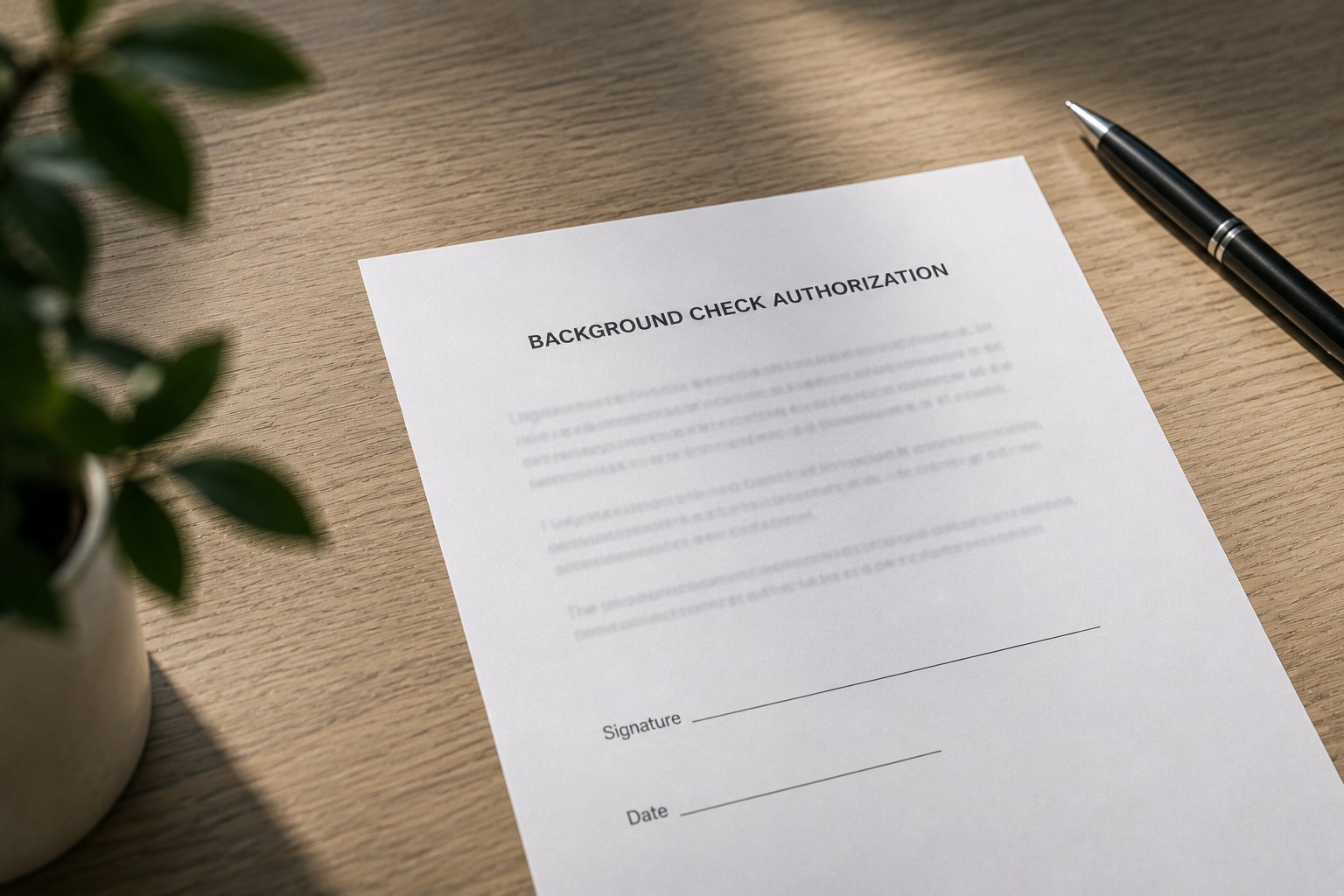
In most employment situations involving a third party screening company, employers generally must provide disclosure and obtain written authorization before ordering a background check under the Fair Credit Reporting Act (FCRA).

Understanding these requirements is important for both employers managing compliance obligations and applicants navigating the hiring process.

Do Employers Need Written Permission?

In most cases, yes.

Before ordering a background check through a third party screening company, employers are generally required to:

  • Provide a clear disclosure
  • Obtain written authorization from the applicant or employee

This requirement applies to many types of employment background checks, including:

  • Criminal background checks
  • Employment verifications
  • Education verifications
  • Credit reports
  • Motor vehicle reports
  • Professional license checks

The authorization process is designed to ensure applicants understand that a background check may be conducted for employment purposes.

What Is the FCRA?

The Fair Credit Reporting Act is a federal law that regulates how consumer reports may be obtained and used.

For employment purposes, the FCRA establishes rules involving:

  • Disclosure requirements
  • Written authorization
  • Accuracy standards
  • Adverse action procedures
  • Applicant rights

When employers use a third party consumer reporting agency to conduct background screening, the FCRA often applies.

What Must Employers Disclose?

Employers generally must provide a standalone disclosure stating that a consumer report may be obtained for employment purposes.

The disclosure should be:

  • Clear
  • Conspicuous
  • Separate from unrelated information

Importantly, the disclosure must not include extraneous information. The FCRA prohibits embedding the disclosure within a job application or combining it with other documents such as liability waivers. Courts and regulators have taken a strict view of this requirement.

What Counts as Authorization?

Authorization is typically obtained through a signed written consent form.

Today, many employers use electronic authorization forms completed through online applicant portals or onboarding systems.

Depending on the situation and applicable law, authorization may sometimes apply to:

  • Initial hiring screening
  • Ongoing employment screening
  • Periodic re-screening programs

Employers should ensure their authorization process complies with applicable federal, state, and local requirements.

When Are Disclosure and Authorization Required?

In most employment situations involving a third party background screening company, employers generally should provide disclosure and obtain authorization before ordering a consumer report.

However, situations can become more complex depending on:

  • Whether a third party screening company is involved
  • The type of information being reviewed
  • Whether screening occurs before or after hiring
  • State or local law requirements
  • Ongoing employee screening policies
  • Government or security clearance investigations

Because these requirements may vary depending on the circumstances, employers should avoid assuming the same rules apply in every screening situation.

What Happens if an Employer Uses a Background Check to Deny Employment?

If an employer is considering making a negative hiring decision based in whole or in part on information contained in a consumer report, the FCRA generally requires the employer to follow the adverse action process.

This usually includes:

  • Providing a pre-adverse action notice
  • Providing a copy of the report
  • Providing a Summary of Rights
  • Allowing the applicant an opportunity to dispute inaccurate information
  • Issuing a final adverse action notice if applicable

These procedures help provide applicants an opportunity to review and respond to report information before a final employment decision is made.

Are There State Law Differences?

Yes.

Some states and local jurisdictions impose additional requirements regarding:

  • Disclosure language
  • Authorization procedures
  • Criminal history inquiries
  • Credit report usage
  • Timing of background checks
  • Applicant notifications

Employers should ensure their screening practices comply with all applicable federal, state, and local laws.

Common Misunderstandings

“Employers Can Secretly Run Any Background Check They Want”

In many employment situations involving third party screening companies, disclosure and authorization are generally required.

“Signing an Application Automatically Gives Permission”

Not necessarily. The FCRA generally requires a standalone disclosure and authorization process.

“Background Checks Only Include Criminal Records”

Employment background checks may also include verifications, motor vehicle records, professional licenses, credit reports, and other screening components depending on the position.

“Current Employees Cannot Be Re-Screened”

Some employers maintain ongoing screening or periodic re-screening programs if proper authorization and policies are in place.

Important: Generally, employers must provide a stand-alone disclosure and obtain written authorization before requesting employment background checks through a third party consumer reporting agency..

Final Thoughts

Background checks are now a routine part of the hiring process for many employers, but they are also subject to important legal requirements.

For employers, clear disclosure and authorization procedures are essential components of FCRA compliance.

For applicants, understanding when permission is required and how background reports may be used can help reduce confusion during the hiring process.

Related Articles

This article is provided for general informational purposes only and is not intended as legal advice.
Employers should consult qualified legal counsel regarding their specific compliance obligations under
the FCRA and applicable state or local laws.
Continue Exploring View All Articles
Home > Insights > AI Screening Tools and the FCRA: What Employers Need to Know

AI Screening Tools and the FCRA: What Employers Need to Know

How AI hiring tools may intersect with FCRA requirements, accuracy standards, adverse action, and employer compliance obligations.

AI Screening

As artificial intelligence tools become more common in hiring, many employers are exploring automated systems to help screen applicants, review resumes, evaluate interviews, or identify potential hiring risks.

While these technologies may improve efficiency, they can also create significant compliance concerns under the Fair Credit Reporting Act (FCRA) and other employment laws.

Employers using AI driven hiring tools should understand how these systems work, when the FCRA may apply, and why human oversight remains important throughout the screening process.

What Are AI Screening Tools?

AI screening tools generally refer to software systems that use automation, algorithms, machine learning, or predictive analysis to assist with hiring decisions.

These tools may help employers:

  • Review resumes
  • Rank applicants
  • Analyze interview responses
  • Evaluate qualifications
  • Identify hiring patterns
  • Flag potential concerns
  • Automate portions of the screening process

Some AI systems are built directly into applicant tracking systems, while others are offered through third party vendors.

Does the FCRA Apply to AI Screening Tools?

In many situations, yes.

The FCRA may apply when an employer uses a third party company to provide information, recommendations, evaluations, or reports used for employment purposes.

This includes certain AI powered screening platforms if they are providing information that helps determine a person’s eligibility for employment.

Regulators have already weighed in on this. In 2024, the Consumer Financial Protection Bureau issued guidance specifically addressing how AI driven hiring tools may trigger FCRA obligations. The guidance noted that AI vendors collecting data from multiple sources to generate worker assessments or algorithmic scores may qualify as consumer reporting agencies under the FCRA, which would subject both the vendor and the employer to the law’s full compliance requirements.

Whether the FCRA applies in a specific situation depends on several factors, including:

  • The source of the information
  • How the data is collected
  • Whether a third party vendor is involved
  • How the information is used in hiring decisions
  • Whether the tool qualifies as a consumer reporting agency under the FCRA

Employers should not assume that AI based hiring tools fall outside traditional compliance obligations.

Why AI Screening Creates Compliance Concerns

AI tools may create compliance risks when employers rely too heavily on automated systems without understanding how decisions are being generated.

Potential concerns may include:

  • Inaccurate or outdated information
  • Lack of transparency
  • Inconsistent evaluation standards
  • Discriminatory impact
  • Automated decision making without human review
  • Use of unverifiable data sources
  • Improper adverse action procedures

In some cases, employers may not fully understand what information the system is analyzing or how candidates are being scored.

Human Oversight Still Matters

One of the biggest misconceptions surrounding AI hiring tools is the belief that automation eliminates the need for human review.

It does not.

Even when AI systems assist with screening, employers remain responsible for ensuring hiring decisions are lawful, job related, and compliant with applicable regulations.

Human oversight remains important for:

  • Reviewing flagged results
  • Verifying report accuracy
  • Evaluating context
  • Applying consistent standards
  • Conducting individualized assessments
  • Following required adverse action procedures

AI tools may assist decision making, but they should not replace responsible hiring practices.

Accuracy and Maximum Possible Accuracy

The FCRA requires consumer reporting agencies to follow reasonable procedures to assure maximum possible accuracy of the information being reported.

This becomes especially important when automated systems are involved.

If AI tools rely on incomplete databases, improperly matched records, outdated information, or unsupported assumptions, employers may face increased compliance risks.

Employers should understand:

  • Where information originates
  • Whether records are verified
  • How disputes are handled
  • Whether human review exists within the process
  • What quality control measures are in place

Automation does not eliminate the responsibility to ensure information is accurate and properly evaluated.

Adverse Action Requirements Still Apply

If an employer uses information from a consumer report to make a negative employment decision, the FCRA’s adverse action procedures may still apply, even when AI systems are involved.

This generally includes:

  • Providing a pre adverse action notice
  • Providing a copy of the report
  • Providing a Summary of Rights
  • Allowing the applicant an opportunity to dispute inaccuracies
  • Issuing a final adverse action notice, if applicable

Employers should avoid assuming that automated systems remove or simplify these legal obligations.

AI Bias and Emerging Regulations

AI hiring tools are receiving increasing attention from regulators at the federal, state, and local levels, and several laws are already in effect.

NYC Local Law 144 requires employers to obtain an independent bias audit before using any automated employment decision tool, with audits renewed annually and results disclosed publicly.

Illinois amended its Human Rights Act effective January 1, 2026, prohibiting employers from using AI in ways that produce discriminatory effects and requiring notice to candidates when AI is used in hiring decisions.

Colorado’s law, taking effect June 30, 2026, covers high-risk AI systems used in employment and requires impact assessments and consumer notification.

Across jurisdictions, regulatory focus has centered on:

  • Automated employment decision tools
  • AI bias audits
  • Transparency requirements
  • Candidate notification obligations
  • Algorithmic accountability standards

This is an active and fast-moving area of law. Employers using AI in hiring should monitor developments closely and not treat compliance as a future concern.

Questions Employers Should Ask AI Vendors

Before implementing AI based hiring or screening tools, employers should understand how the technology operates and what compliance protections exist.

Important questions may include:

  • What data sources are being used?
  • How is information verified?
  • Is human review involved?
  • How are disputes handled?
  • Does the system create explainable results?
  • Has the tool been evaluated for discriminatory impact?
  • What FCRA compliance measures are built into the process?

Employers should avoid relying on vague marketing claims about automation, accuracy, or bias free decision making.

Common Employer Misunderstandings

“AI Hiring Tools Automatically Reduce Bias”

Not necessarily. AI systems may still create discriminatory outcomes depending on the data, design, or evaluation criteria involved.

“Automation Eliminates Compliance Obligations”

No. Employers remain responsible for complying with the FCRA and other employment laws even when automated systems are used.

“AI Decisions Are Always Objective”

AI systems are only as reliable as the data, programming, assumptions, and oversight behind them.

“If a Vendor Handles It, the Employer Has No Liability”

Employers may still face liability for how screening information is used during the hiring process.

Important: Using AI in hiring does not eliminate FCRA obligations. Employers remain responsible for ensuring screening practices are accurate, lawful, consistent, and properly reviewed by humans when necessary.

Final Thoughts

AI based hiring and screening tools are likely to become increasingly common, but automation does not replace compliance responsibilities.

Employers using AI systems should understand how screening decisions are generated, what information is being analyzed, and whether appropriate safeguards exist to ensure fairness, accuracy, transparency, and legal compliance.

The regulatory landscape around AI in hiring is no longer hypothetical. Employers should treat compliance as an immediate operational concern, not a future one.

Related Articles

This article is provided for general informational purposes only and is not intended as legal advice.
Employers should consult qualified legal counsel regarding their specific compliance obligations under
the FCRA and applicable state or local laws.
Continue Exploring View All Articles
Home > Insights > FCRA vs. State Laws: What Employers Need to Know

FCRA vs. State Laws:
What Employers Need to Know

Understanding how federal, state, and local background screening laws work together, and where employers commonly face compliance risk.

FCRAStates

Employers often assume that complying with the Fair Credit Reporting Act (FCRA) is enough to satisfy background screening requirements. In reality, many states have enacted additional laws that go beyond federal requirements, creating a layered compliance landscape that can quickly become complicated.

Understanding how federal and state laws work together is critical for employers conducting background checks. A process that may appear compliant under federal law could still create risk under state or local regulations.

This article explains the difference between the FCRA and state background screening laws, where employers commonly encounter problems, and why compliance becomes increasingly complex for multi-state organizations.

Important: Many states impose stricter hiring and background screening requirements than federal law. Hiring practices that comply with the FCRA or are permitted in one jurisdiction may still create compliance risk in another.

What Is the FCRA?

The Fair Credit Reporting Act (FCRA) is a federal law that regulates how consumer reports, including employment background checks, are obtained and used.

When employers use a third-party Consumer Reporting Agency (CRA) to conduct background checks, the FCRA establishes requirements designed to protect applicants and employees.

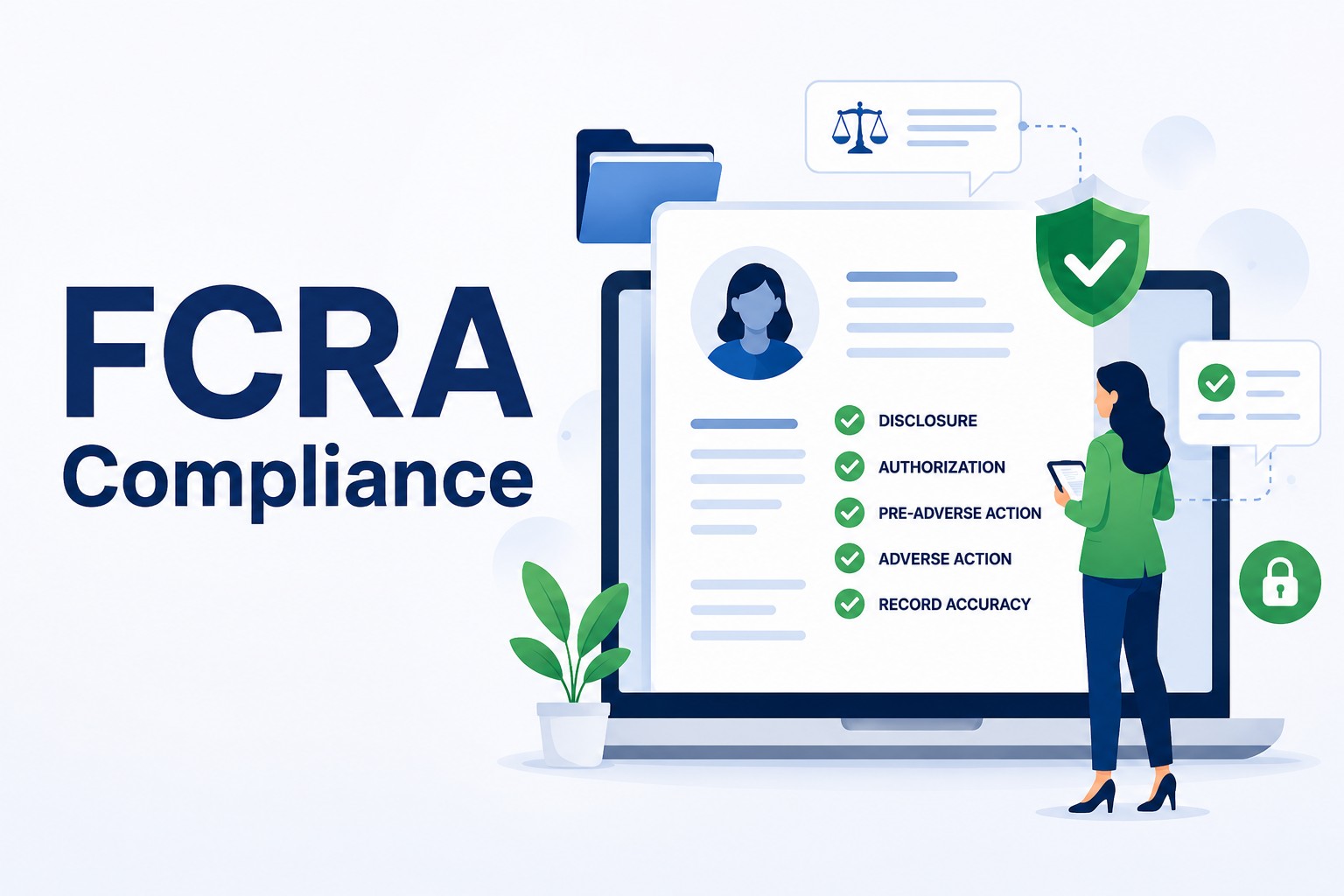
  • Providing a clear disclosure before obtaining a background check
  • Obtaining written authorization from the applicant or employee
  • Certifying permissible purpose
  • Following the pre-adverse action and adverse action process
  • Providing copies of reports and rights summaries when required
  • Allowing individuals the opportunity to dispute inaccurate information

The FCRA applies nationwide and creates the baseline framework for employment screening compliance.

Why State Laws Matter

States may create laws that provide greater protections than federal law. In many cases, employers must comply with both the FCRA and additional state-specific requirements simultaneously.

A background check process that satisfies federal law may still violate state fair chance hiring laws, state consumer reporting laws, local Ban the Box ordinances, marijuana testing restrictions, salary threshold rules, or state-specific disclosure requirements.

For employers operating across multiple states, screening policies often require careful customization depending on where the applicant works.

The FCRA Creates the Floor, Not the Ceiling

One of the most important concepts employers should understand is that the FCRA establishes minimum federal requirements, but states may impose stricter rules.

Employers are generally expected to follow whichever law provides greater protection to the consumer.

For example, the FCRA may permit certain reporting practices, while a state law may restrict or prohibit those same practices. In those situations, the stricter state requirement often controls.

Common Areas Where State Laws Differ

Although laws vary widely by jurisdiction, several compliance areas create the most confusion for employers.

Reporting Time Limits

The FCRA limits the reporting of non-conviction information (arrests, dismissed charges, civil suits, paid tax liens) to seven years for positions paying under $75,000 annually. Criminal convictions may be reportable indefinitely under federal law, though many states impose their own limits.

Some states restrict conviction reporting to seven years regardless of salary, and others place additional limits on how far back employers may consider criminal history when making hiring decisions.

Ban the Box and Fair Chance Hiring Laws

Many states and local jurisdictions have enacted Ban the Box or Fair Chance Hiring laws.

These laws may regulate when criminal history questions can be asked, when background checks may occur, how employers evaluate criminal records, whether individualized assessments are required, and what notices must be provided before adverse action.

Some jurisdictions prohibit criminal history inquiries until after the first interview, a conditional offer, or another later stage of the hiring process.

Others require employers to consider the nature of the offense, the time passed, and the relationship between the record and the job duties.

Marijuana and Drug Testing Restrictions

Drug testing laws are rapidly evolving at the state level.

While federal law still classifies marijuana as a controlled substance, some states restrict employment decisions based solely on off-duty marijuana use, a positive marijuana test, or recreational cannabis use.

Certain states prohibit adverse action for marijuana findings unless impairment occurred during work, safety-sensitive roles are involved, or federal regulations apply.

DOT-regulated positions operate under separate federal requirements, which may override state recreational marijuana laws.

Credit Report Restrictions

The FCRA governs how credit reports are obtained and used, but several states restrict when employers may request employment credit reports at all.

Some states limit credit report use to financial positions, management roles, or positions involving access to sensitive financial information.

Improper use of employment credit reports can create both compliance and litigation risk.

California: A Major Compliance Example

California is one of the most heavily regulated employment screening environments in the country.

In addition to the FCRA, California employers may also encounter the Investigative Consumer Reporting Agencies Act (ICRAA), Consumer Credit Reporting Agencies Act (CCRAA), California Fair Chance Act, state privacy laws, salary threshold considerations, and marijuana employment protections.

California also places significant emphasis on individualized assessments, job-relatedness, business necessity, and procedural fairness.

For example, employers subject to California Fair Chance laws may be required to evaluate the relationship between criminal history and job duties, consider rehabilitation and time passed, and provide detailed notices before final adverse action.

Why Multi-State Employers Struggle With Compliance

Many employers use a single national hiring process for simplicity and operational consistency.

Unfortunately, compliance laws are rarely uniform. An employer hiring in multiple states may encounter different requirements for disclosures, authorization forms, timing rules, adverse action procedures, criminal history evaluations, and drug testing policies.

As laws continue changing rapidly, maintaining compliant procedures becomes increasingly difficult without ongoing monitoring.

Common Employer Mistakes

Using Generic Disclosure Forms

Disclosure and authorization forms may not satisfy state-specific language requirements.

Failing to Provide State-Specific Summary of Rights Documents

The FCRA requires employers to provide applicants with a summary of their rights, but several states (including California and New York) require their own versions beyond the federal CFPB summary. Using only the federal document may not satisfy state obligations.

Applying One Hiring Policy Nationwide

A single standardized policy may violate local restrictions in certain jurisdictions.

Taking Automatic Adverse Action

Automatically disqualifying candidates based on criminal records may create compliance risk under Fair Chance laws.

Ignoring Individualized Assessments

Some jurisdictions require employers to evaluate context rather than relying solely on the existence of a record.

Overlooking Local Laws

City and county regulations may create additional requirements beyond state law.

How Employers Reduce Compliance Risk

Employers can reduce risk by reviewing hiring workflows regularly, using state-compliant disclosure forms, training HR personnel on adverse action requirements, understanding jurisdiction-specific restrictions, maintaining consistent documentation, and partnering with knowledgeable screening providers.

Strong compliance processes are not only about avoiding legal exposure. They also help create fairer, more defensible hiring decisions.

Compliance Is Constantly Evolving

Background screening laws continue changing rapidly across the country.

New Ban the Box laws, Fair Chance Hiring ordinances, privacy regulations, marijuana employment protections, and AI hiring regulations continue reshaping employer obligations. Several jurisdictions, including Illinois and New York City, have enacted laws specifically governing the use of automated decision-making tools in hiring, with requirements around bias audits, candidate notifications, and data transparency. Employers using AI-assisted screening tools should confirm those tools meet applicable local requirements.

Policies that were compliant several years ago may no longer satisfy current legal expectations.

Final Thoughts

The FCRA remains the foundation of employment background screening compliance, but employers must also understand how state and local laws affect hiring decisions.

Compliance is no longer a one-size-fits-all process.

As hiring regulations continue evolving, employers benefit from clear procedures, consistent documentation, ongoing compliance review, and knowledgeable screening support.

Understanding the relationship between federal and state laws helps employers make more informed, defensible, and compliant hiring decisions.

Related Articles

This article is provided for general informational purposes only and is not intended as legal advice.
Employers should consult qualified legal counsel regarding their specific compliance obligations under
the FCRA and applicable state or local laws.

Continue Exploring View All Articles
Home > Insights > Understanding the FCRA

Understanding the FCRA

The Fair Credit Reporting Act (FCRA) governs how employers obtain, use, and evaluate background check information during the hiring process. Understanding these requirements helps employers improve compliance, reduce risk, and protect applicant rights.

Coverage Map

Hiring decisions carry risk. Employers want to protect their workplace, customers, reputation, and team. At the same time, applicants have legal rights that must be respected throughout the background screening process.

That is where the Fair Credit Reporting Act, commonly called the FCRA, becomes critical.

The FCRA is the primary federal law governing employment background checks conducted by third-party Consumer Reporting Agencies. It establishes rules for obtaining, using, and handling background reports while also protecting consumer privacy and promoting accuracy.

Many employers assume FCRA compliance is simply about getting a signed authorization form. It is not.

The law affects nearly every stage of the screening process, including disclosure and authorization, report accuracy, applicant rights, adverse action procedures, dispute handling, data use, and recordkeeping.

Even small mistakes can create significant legal exposure. Technical violations alone have resulted in expensive lawsuits and class-action settlements against employers across the country.

Understanding how the FCRA works helps employers build safer, more compliant hiring practices while protecting both applicants and their organization.

Important: Many FCRA lawsuits are caused by procedural mistakes, not intentional misconduct. Employers can face significant legal exposure for issues such as improper disclosure forms, failing to follow pre-adverse action procedures, or taking adverse action before allowing applicants an opportunity to dispute information. Even technical violations may result in costly litigation and regulatory scrutiny.

What Is the FCRA?

The Fair Credit Reporting Act is a federal law originally enacted to regulate how consumer information is collected, shared, and used. While many people associate the FCRA with credit reports, the law also governs employment background checks when reports are prepared by a third-party background screening company.

If an employer uses a background screening company to obtain information about an applicant or employee, the FCRA likely applies.

This can include reports involving criminal history, employment verification, education verification, credit history, motor vehicle records, professional licenses, drug testing results, reference interviews, identity verification, and civil records.

The law applies regardless of company size. A small business hiring one employee and a national company hiring thousands are both expected to comply.

What Is a Consumer Reporting Agency?

A Consumer Reporting Agency, often called a CRA, is a company that assembles or evaluates consumer information for employment purposes. Background screening companies fall into this category.

CRAs help employers obtain and verify information while maintaining procedures designed to promote accuracy and compliance.

Examples of services commonly provided by CRAs include criminal record searches, employment verification, education verification, motor vehicle reports, drug testing coordination, identity research, compliance support, and adverse action tools.

Employers should work with a reputable CRA that understands FCRA requirements and maintains strong quality-control procedures.

Why the FCRA Matters

The FCRA exists to balance two important interests. Employers need reliable information to make informed hiring decisions, and consumers deserve fairness, transparency, and the opportunity to dispute inaccurate information.

Without safeguards, applicants could be denied employment based on incorrect criminal records, mixed files, outdated information, identity confusion, incomplete records, or data-entry errors.

The FCRA establishes standards intended to reduce those risks.

For employers, compliance is not optional. Failure to follow FCRA procedures can lead to lawsuits, regulatory investigations, financial penalties, reputational damage, and operational disruption.

When Does the FCRA Apply?

The FCRA generally applies when an employer hires a third-party company to conduct a background check and uses the report for employment purposes.

This includes pre-employment screening, promotions, reassignments, retention decisions, contractor screening, and some volunteer screening programs.

The law may still apply even if the employer never reviews the report directly. If the report is obtained for employment purposes through a CRA, FCRA obligations should be considered.

The FCRA Background Check Process

Understanding the full compliance workflow is essential. Employers should not treat background screening as a single transaction. It is a process with specific steps before, during, and after the report is completed.

Step 1: Provide a Clear Disclosure

Before obtaining a background check, employers must provide a clear disclosure informing the applicant that a consumer report may be obtained for employment purposes.

This disclosure should be clear, conspicuous, and separate from unrelated application materials.

One of the most common employer mistakes is combining the disclosure with unrelated language, such as liability waivers, broad legal releases, employment policies, or extra acknowledgments.

The safest approach is to keep the disclosure simple and focused on the background check.

Step 2: Obtain Written Authorization

Employers must obtain written authorization before ordering the report. Authorization may be paper-based or electronic.

Many employers now use electronic disclosure and authorization systems for efficiency and recordkeeping. Regardless of format, the authorization should be retained as part of the employer’s compliance records.

Step 3: Certify Compliance to the CRA

Before providing reports, the CRA generally requires employers to certify that they will follow FCRA requirements, use reports only for permissible employment purposes, comply with adverse action procedures, and avoid discriminatory use of information.

This certification is usually included in the client service agreement.

Step 4: The CRA Conducts the Background Check

The CRA then gathers and verifies information from appropriate sources. Depending on the screening package, this may include county criminal courts, federal courts, national databases, sex offender registries, employment records, educational institutions, motor vehicle departments, and professional licensing boards.

Many employers mistakenly assume all criminal data comes from one national source. That is not how background screening works.

National criminal databases are only one research tool and often contain incomplete or limited information.

Related articles:

Step 5: Review the Results Carefully

A background report does not automatically determine whether someone should or should not be hired. Employers should evaluate findings carefully and consistently.

Relevant considerations may include job relevance, the nature of the offense, severity, time passed, rehabilitation, state and local laws, and individual circumstances.

Automatic disqualification policies can create compliance risk, especially when criminal history is considered without context.

Related articles:

Step 6: Follow Pre-Adverse Action Procedures

If an employer may take negative action based in whole or in part on the background report, the FCRA requires a pre-adverse action process.

Before making a final decision, the employer must generally provide the applicant with a pre-adverse action notice, a copy of the report, and a Summary of Rights under the FCRA.

The applicant must then be given a reasonable opportunity to review and dispute the information.

This step exists because background reports can contain errors or incomplete information.

Related article: What is Pre-Adverse Action?

Step 7: Send the Final Adverse Action Notice

If the employer ultimately proceeds with the negative decision, a final adverse action notice must be provided.

This notice generally includes notification of the decision, CRA contact information, a statement that the CRA did not make the hiring decision, and notice of the consumer’s right to dispute the report.

Failure to follow proper adverse action procedures is one of the most common causes of FCRA litigation.

Common Employer FCRA Mistakes

Combining Disclosure Forms

Adding liability waivers, policy acknowledgments, or unrelated legal language to the disclosure form can create compliance concerns.

Skipping Pre-Adverse Action

Some employers move directly to rejection without providing the required notice, report copy, and opportunity to dispute.

Using Outdated Forms

FCRA forms should be reviewed regularly to make sure they remain current and appropriate.

Relying Solely on Databases

Database searches alone may not provide complete or current criminal information. Court-level verification remains important.

Related article: Why Some Criminal Records Are Missing From Databases

Applying Blanket Hiring Policies

Automatically disqualifying anyone with a criminal record can create legal exposure under the FCRA, state laws, local laws, and fair hiring guidance.

Failing to Document Procedures

Employers should maintain documentation showing that compliance steps were followed consistently.

Accuracy Matters

The FCRA requires CRAs to maintain reasonable procedures to assure maximum possible accuracy.

Accuracy is one of the law’s central principles because background reports may involve similar names, multiple jurisdictions, incomplete court data, delayed updates, identity confusion, or conflicting records.

Responsible screening companies use layered review procedures to reduce errors and resolve inconsistencies.

This may include verifying identifiers, reviewing date-of-birth information, checking court dockets, confirming dispositions when available, and resolving conflicting information before reporting.

How Long Can Information Be Reported?

The FCRA includes reporting limitations for certain types of information. However, rules can vary depending on the type of record, the position, salary level, and applicable state law.

Many states impose stricter rules than federal law, especially for criminal history reporting.

Employers should avoid assuming that one national rule applies everywhere.

Related article: How Far Back Does a Background Check Go?

State and Local Laws Also Matter

FCRA compliance alone is not enough.

Employers must also consider state laws, local ordinances, Ban the Box laws, Fair Chance Hiring laws, and industry-specific rules.

These laws may regulate when criminal history can be considered, what notices must be provided, how long employers must wait before making a final decision, and whether individualized assessments are required.

Related article: What Is Ban the Box?

Understanding Common Background Check Components

SSN Trace

An SSN Trace is primarily a research tool. It may help identify associated names, alias names, address history, and jurisdictions for additional research. It is not a criminal search by itself.

Related article: What Is an SSN Trace?

County Criminal Searches

County criminal searches are often considered a primary source for criminal record research because most criminal cases originate at the county level.

Related article: County vs. Federal Criminal Searches

Federal Criminal Searches

Federal searches involve crimes prosecuted in U.S. District Courts. Examples may include wire fraud, embezzlement, federal tax offenses, and certain interstate crimes.

National Criminal Databases

National databases compile criminal data from many sources, but coverage and update frequency vary. These databases are useful research tools, but they should not be treated as complete nationwide court searches.

Related article: What Is a National Criminal Database Search?

Motor Vehicle Reports

MVR reports may include license status, suspensions, traffic violations, accidents, and DUI-related records. These reports are especially important for driving-related positions.

Related article: What Is an MVR Report?

Drug Testing

Drug testing may involve additional state, federal, and industry-specific requirements. Employers should understand the difference between DOT and non-DOT testing programs.

Related article: DOT vs. Non-DOT Drug Tests

Choosing a Background Screening Partner

Not all CRAs operate the same way. Employers should look for a provider that offers responsive support, compliance guidance, clear reporting, accurate research procedures, adverse action tools, secure systems, and consistent communication.

Fast turnaround times matter, but accuracy and compliance matter more. A report completed quickly but inaccurately can create serious risk.

Employers using AI-powered hiring or screening tools should confirm those systems comply with FCRA requirements, as use of this technology may trigger the same notice and consent obligations as traditional background reports.

Best Practices for Employers

Use Standardized Procedures

Use consistent screening procedures across departments whenever possible.

Keep Forms Updated

Review disclosure, authorization, and adverse action forms regularly to ensure your organization is using current versions required by federal regulations. The CFPB updates model forms and compliance language as regulations change, and outdated documents may create unnecessary compliance risk.

Train HR Personnel

Make sure HR teams understand pre-adverse action, adverse action, Ban the Box, Fair Chance Hiring, and state-specific restrictions.

Document Compliance Steps

Maintain records of authorizations, notices, adverse action communications, screening policies, and applicant communications.

Evaluate Records Individually

Review findings in context instead of relying only on blanket disqualification rules.

The Cost of Non-Compliance

FCRA lawsuits can be expensive even when no actual harm occurred. Many cases focus on technical violations involving disclosure forms, authorization procedures, and adverse action notices.

Employers have faced large settlements, legal fees, regulatory scrutiny, and reputational damage because of avoidable compliance mistakes.

Proactive compliance is far less expensive than reactive litigation.

Final Thoughts

The FCRA is not simply paperwork. It is the legal framework governing how employers obtain, use, and act on background information.

Understanding the law helps employers protect applicants’ rights, improve hiring consistency, reduce compliance exposure, and make more informed decisions.

Background screening works best when it balances workplace safety, fairness, accuracy, and compliance.

As regulations continue evolving, employers should regularly review their screening practices and work with an experienced, compliance-focused screening partner.

Related Articles

This article is provided for general informational purposes only and is not intended as legal advice.
Employers should consult qualified legal counsel regarding their specific compliance obligations under
the FCRA and applicable state or local laws.

Continue Exploring View All Articles
Home > Insights > What is Pre-Adverse Action?

What is Pre-Adverse Action?

Pre-adverse action is a critical step in the background screening process. Here’s what employers need to know to stay compliant and protect applicant rights.

When a background check reveals information that may impact an employment decision, employers must follow a legally required process before taking adverse action. That process is called pre-adverse action.

The Fair Credit Reporting Act (FCRA) requires employers to provide applicants or employees with specific notices and a reasonable opportunity to dispute inaccurate information before a final decision is made. Understanding each step helps you stay compliant and protect both your organization and the individual.

What is Pre-Adverse Action

Pre-adverse action is the formal notice an employer must provide before taking negative action based in whole or in part on information in a consumer report.

This process gives the individual a chance to review the report and dispute any inaccurate or incomplete information.

Examples of adverse actions include:

  • Denying employment
  • Rescinding a job offer
  • Terminating employment
  • Demoting or reassigning an employee
  • Denying a promotion

What Employers Must Provide

Before taking adverse action, employers must provide the following:

1
A Pre-Adverse Action Notice This informs the individual that adverse action is being considered based on information in the report.
2
A Copy of the Consumer Report The individual must receive a copy of the report used in the decision.
3
A Summary of Rights Under the FCRA This official document, provided by the Consumer Financial Protection Bureau (CFPB), explains the individual’s rights to dispute inaccurate information.
Important: Employers must allow a reasonable amount of time for the individual to review and dispute the information before making a final decision.

What Happens After?

If the employer decides to proceed with adverse action after allowing the individual reasonable time to review the information, a final adverse action notice must be sent. This notice must include:

  • The employer’s decision.
  • The name, address, and phone number of the CRA that furnished the report.
  • A statement that the CRA did not make the decision.
  • Notice of the individual’s right to dispute the report.
  • Notice of the right to obtain another free copy of the report within 60 days.

Why Getting It Right Matters

Failing to follow the pre-adverse action process can lead to compliance violations, costly lawsuits, and damage to your reputation.

A consistent, well-documented process helps you:

  • Reduce legal risk
  • Support fair hiring
  • Build trust with candidates
  • Maintain FCRA compliance

A strong process protects candidates, clients, and your business. Compliance is not just paperwork. It is part of building trust and reducing unnecessary risk.

Related Articles

This article is provided for general informational purposes only and is not intended as legal advice.
Employers should consult qualified legal counsel regarding their specific compliance obligations under
the FCRA and applicable state or local laws.
Continue Exploring View All Articles
Home > Insights > What is Ban the Box?

What is Ban the Box?

Ban the Box and Fair Chance Hiring laws regulate when employers may ask about criminal history and conduct employment background checks during the hiring process.

Ban the Box

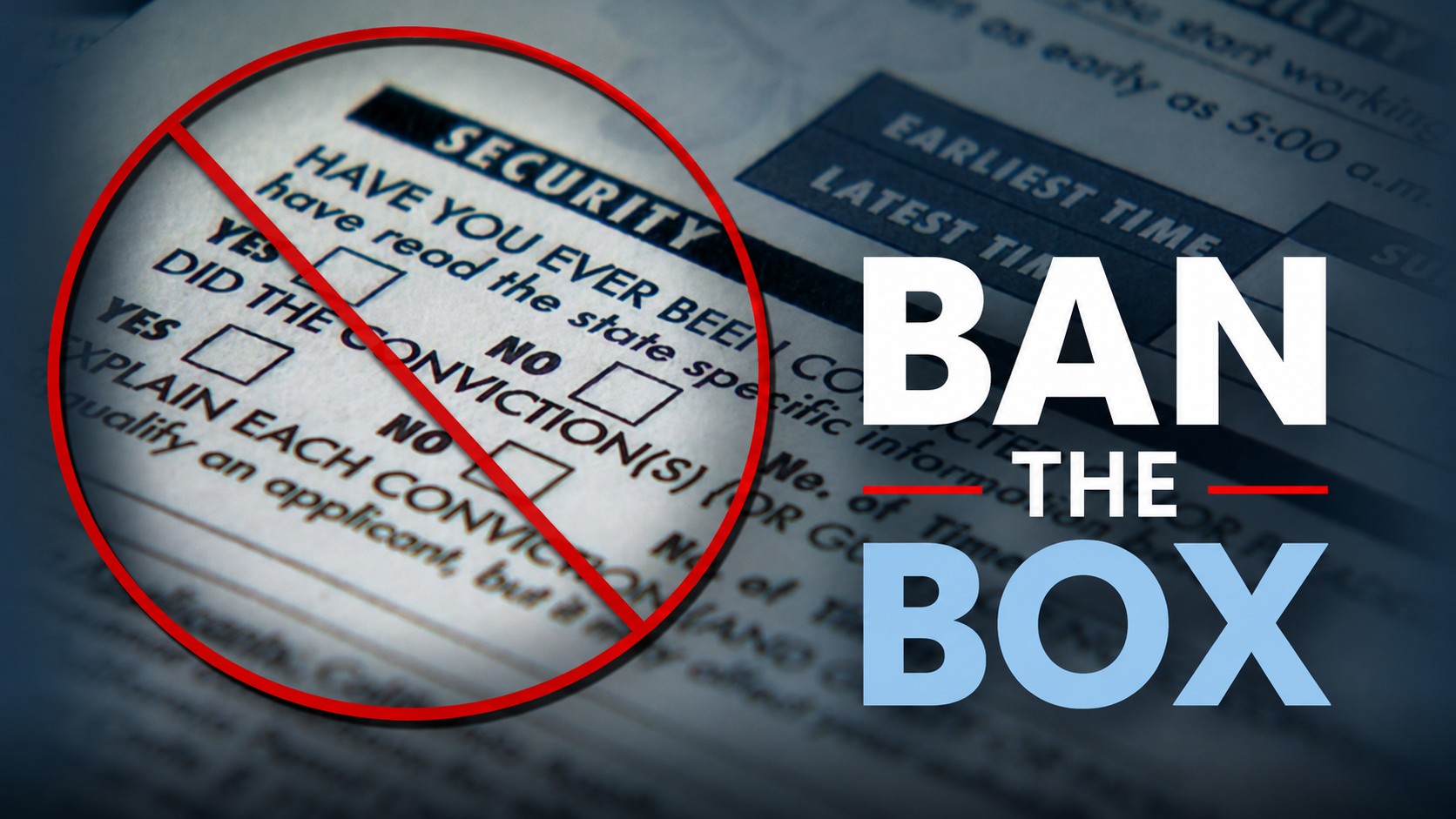
“Ban the Box” laws, also known as Fair Chance Hiring laws or Fair Chance Acts, regulate when employers may ask about criminal history during the hiring process.

These laws have become increasingly common across the United States, particularly in states such as California, as well as many cities and counties with their own Fair Chance Hiring ordinances.

For employers conducting employment background checks, understanding Ban the Box compliance is an important part of maintaining lawful hiring practices.

What Does “Ban the Box” Mean?

The term “Ban the Box” refers to laws that prohibit employers from asking about criminal history too early in the hiring process.

The phrase comes from the checkbox commonly found on employment applications asking applicants whether they have been convicted of a crime.

Under many Ban the Box laws, employers may not:

  • ask about criminal convictions on the initial job application
  • inquire about criminal history before certain hiring stages
  • run criminal background checks before a conditional job offer in some jurisdictions

The goal of Fair Chance Hiring laws is to give applicants an opportunity to be evaluated on their qualifications before criminal history is considered.

How Ban the Box Laws Affect Employment Background Checks

Ban the Box laws do not prohibit employers from conducting criminal background checks altogether.

Instead, these laws typically regulate:

  • when criminal background checks may occur
  • how employers evaluate criminal records
  • what notices employers must provide
  • whether individualized assessments are required

In many jurisdictions, employers may still conduct criminal background checks after:

  • an interview
  • a conditional job offer

The timing requirements vary depending on the applicable state or local law.

California Ban the Box Law

California’s Fair Chance Act is one of the most widely discussed Ban the Box laws in the country.

The regulations were last updated in October 2023, expanding the definition of ’employer’ to include staffing agencies and third-party entities that evaluate conviction history on behalf of employers, and adding new individualized assessment factors.

Under California Fair Chance Hiring requirements, employers with five or more employees generally may not:

  • ask about conviction history before a conditional job offer
  • consider certain non-conviction information
  • automatically disqualify applicants without an individualized assessment

If an employer intends to deny employment based on criminal history after a background check, California law may require:

  • an individualized assessment
  • pre-adverse action procedures
  • written notice to the applicant
  • an opportunity for the applicant to respond

California employers must also comply with the Fair Credit Reporting Act (FCRA) and applicable state employment laws when using background screening reports.

What Is an Individualized Assessment?

Many Fair Chance Hiring laws require employers to evaluate criminal records on a case-by-case basis rather than using blanket disqualification policies.

An individualized assessment may consider:

  • the nature and seriousness of the offense
  • how long ago the offense occurred
  • the nature of the job being sought
  • evidence of rehabilitation
  • whether the offense is relevant to the position

This process is intended to help employers make more balanced and legally compliant hiring decisions.

Are Employers Still Allowed to Conduct Criminal Background Checks?

Yes. Employers may still conduct employment background checks in most jurisdictions.

However, Ban the Box and Fair Chance Hiring laws may affect:

  • timing
  • disclosure requirements
  • adverse action procedures
  • how criminal history is evaluated

Some industries and positions may also be subject to separate legal or regulatory screening requirements.

Why Compliance Matters

Employers that fail to comply with Ban the Box laws may face:

  • regulatory penalties
  • discrimination claims
  • lawsuits
  • reputational risk

Because laws vary significantly by jurisdiction, many employers work with background screening providers and legal counsel to help maintain compliant hiring practices.

Final Thoughts

Ban the Box laws and Fair Chance Hiring regulations continue to reshape how employers conduct criminal background checks during the hiring process.

While these laws do not eliminate employment background checks, they often regulate when criminal history may be considered and how hiring decisions must be evaluated.

A compliant screening process helps employers balance workplace safety, hiring fairness, and legal compliance while making informed employment decisions.

Important: Ban the Box and Fair Chance Hiring laws vary significantly by state and local jurisdiction. Employers should review applicable laws before implementing criminal background check policies.

Related Articles

This article is provided for general informational purposes only and is not intended as legal advice.
Employers should consult qualified legal counsel regarding their specific compliance obligations under
the FCRA and applicable state or local laws.

Continue Exploring View All Articles
Home > Insights > Background Checks for Staffing Agencies: FCRA Explained

Background Checks for Staffing Agencies: FCRA Explained

Understanding the Fair Credit Reporting Act is essential for staffing firms that rely on background checks to support hiring decisions.

Business Meeting

Staffing firms move quickly. Clients need candidates placed, candidates want to start work, and hiring teams need reliable information before making employment decisions. That speed makes compliance especially important.

The Fair Credit Reporting Act, commonly known as the FCRA, sets rules for how consumer reports may be obtained and used for employment purposes. When a background check is used in connection with employment, staffing firms need a process that protects the candidate, the client, and the business.

Why FCRA Compliance Matters

Background reports can contain sensitive information, including criminal records, motor vehicle records, employment history, education history, and other consumer information. The FCRA establishes requirements regarding disclosure, authorization, permissible purpose, and the handling of consumer report information.

For staffing firms, compliance mistakes can create serious risk. Problems with disclosure forms, authorization language, pre-adverse action notices, or final adverse action notices can lead to disputes, client concerns, regulatory complaints, or litigation.

Key FCRA Requirements for Staffing Firms

1
Obtain written disclosure and authorization Before ordering a background check, the candidate must receive proper disclosure and provide written authorization.
2
Use the report for a permissible purpose Employment screening reports should only be ordered for a legitimate employment-related purpose.
3
Follow the pre-adverse action process If information in the report may negatively affect the candidate, the candidate must first receive a pre-adverse action notice, a copy of the report, and a summary of their rights.
4
Allow the candidate time to respond Candidates should be given a reasonable opportunity to review the report and dispute information they believe is incomplete or inaccurate.
5
Send final adverse action notice when required If the final decision is based in whole or in part on the report, a final adverse action notice should be sent with the required information.

Best Practices for Staffing Firms

  • Use current standalone disclosure and authorization forms.
  • Train internal staff on when pre-adverse and adverse action notices are required.
  • Keep documentation showing when notices were sent.
  • Review reports carefully before making employment decisions.
  • Work with a screening partner that understands staffing timelines and compliance sensitive workflows.
Important Distinction: Candid Research provides background reports and related screening services. The employer or staffing firm makes the employment decision.

A strong process protects candidates, clients, and your business. For staffing firms, compliance is not just paperwork. It is part of building trust and reducing unnecessary risk.

Related Articles

This article is provided for general informational purposes only and is not intended as legal advice.
Employers should consult qualified legal counsel regarding their specific compliance obligations under
the FCRA and applicable state or local laws.
Continue Exploring View All Articles